
 100% Canadian Owned and Led
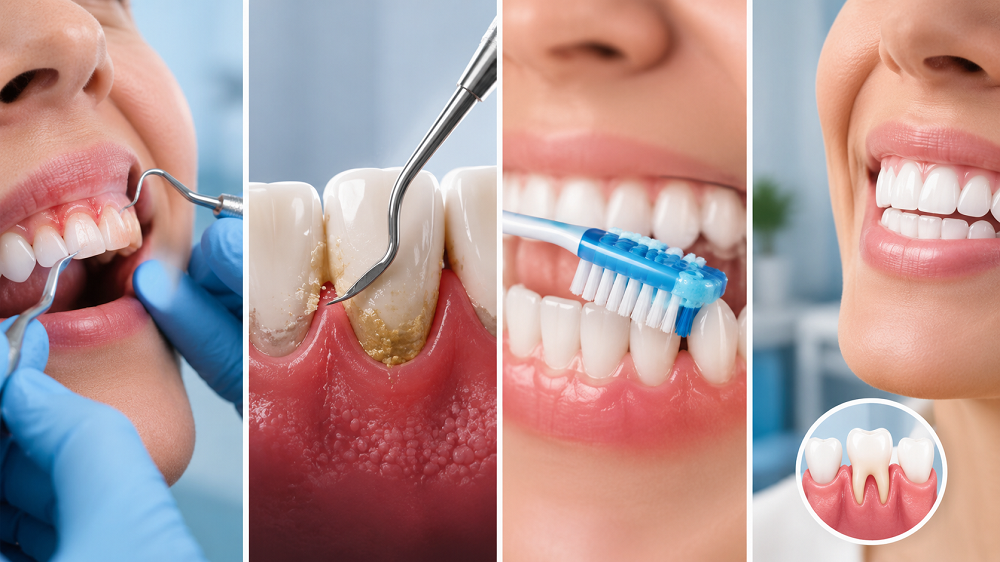
Your gums are the foundation of your entire smile. Healthy gums hold your teeth in place, protect the underlying bone, and play a bigger role in your overall health than most people realize. When gum health is ignored, the consequences go far beyond a little bleeding when you brush. If you have been searching for a periodontist near you, understanding what periodontal care actually involves—and what it can do for your oral health—is the perfect place to start.
What Is Periodontal Care?
Periodontal care refers to the prevention, diagnosis, and treatment of conditions that affect the gums and the bone supporting your teeth.
The word “periodontal” simply means “around the tooth.” It covers all the tissues and structures that keep your teeth anchored firmly in your jaw.
Periodontal treatment entails:
- Routine examination and monitoring of your gums
- Professional cleaning above and below the gum line
- Scaling and root planing for deeper infections
- Treatment for gingivitis and periodontitis
- Ongoing maintenance to prevent gum disease from returning
It is not just for people who already have gum disease. It is for anyone who wants to keep their gums—and their teeth—healthy for the long term.
Why Gum Health Matters More Than People Think
Many people focus on their teeth and give very little thought to their gums. But gum disease is one of the leading causes of tooth loss in adults.
If you are looking for a dentist near you who takes gum health seriously, here is why it truly matters:
- Gum disease can progress silently—with little to no pain in the early stages
- Bacteria from infected gums can enter the bloodstream and affect the rest of the body
- Research links gum disease to heart disease, diabetes, stroke, and pregnancy complications
- Once bone loss occurs from advanced gum disease, it cannot be fully reversed
Looking after your gums is not optional. It is a core part of looking after your overall health.
The Two Main Stages of Gum Disease
Understanding the stages helps explain why early periodontal care makes such a big difference.
| Stage | Name | What Is Happening | Is It Reversible? |
| Early stage | Gingivitis | Gums are inflamed and may bleed | Yes, fully reversible with treatment |
| Advanced stage | Periodontitis | Infection has spread to the bone and tissue | Manageable but not fully reversible |
Gingivitis is common and completely treatable. But left alone, it progresses into periodontitis—where the damage becomes permanent.
This is exactly why catching gum disease early through regular periodontal care is so important.
How Periodontal Care Improves Your Oral Health
Here is a clear breakdown of the direct benefits:
It Removes What Brushing Cannot
Even the most diligent brushing and flossing cannot remove hardened tartar. Tartar builds up below the gum line and irritates the surrounding tissue. Professional periodontal cleaning removes it completely — something only a dental professional can do.
It Stops Early Gum Disease
Early stages of gum disease are reversible with professional cleanings and improved home care, negating the requirement for more involved and more expensive procedures down the road.
It Protects the Bone Supporting Your Teeth
Advanced gum disease destroys the bone that holds your teeth in place. Periodontal treatment stops that destruction from progressing further—protecting the structural foundation of your entire smile.
It Reduces Inflammation Throughout the Body
Chronic gum inflammation does not stay in the mouth. Treating it reduces the overall bacterial burden on the body, which can have a positive effect on systemic health conditions like diabetes and cardiovascular disease.
It Keeps Your Natural Teeth Longer
Gum disease is the number one cause of adult tooth loss. Regular periodontal care significantly reduces that risk—helping you keep your natural teeth for as long as possible.
What to Expect at a Periodontal Care Appointment
A periodontal visit is thorough but straightforward. Here is what typically happens:
- Gum assessment—the dentist or hygienist measures the depth of the pockets around each tooth
- X-rays, if needed — to check for bone loss beneath the gum line
- Professional cleaning — tartar and plaque are removed above and below the gum line
- Scaling and root planing, if required — a deeper clean for more advanced cases
- Personalized advice — guidance on improving your home care routine
- Maintenance schedule — a follow-up plan to keep your gums healthy going forward
Your Gums Deserve the Same Attention as Your Teeth
Healthy gums support everything else in your mouth. Without them, even the healthiest teeth are at risk. Periodontal care is not just a treatment — it is a long-term investment in your smile, your confidence, and your overall well-being.
At Whyte Ave Dental Choice, you can be sure that all patients will receive excellent, concerned care from a team that cares about oral health in the long run. So if you’re worried about your gums or want to catch potential problems before they arise, call us today to start down the path toward healthier gums and a stronger smile.
FAQs
Q1. What are the signs of gum disease?
The signs include bleeding when brushing, redness or swelling of gums, chronic bad breath, gum recession, and mobility of the teeth—it is possible, however, for there to be no obvious signs of the condition to you; hence, the importance of a regular dental checkup.
Q2. Is periodontal treatment painful?
Most periodontal treatments are carried out under local anesthesia or with numbing gel, so discomfort during the procedure is minimal—some tenderness afterward is normal and settles quickly.
Q3. How often should I have a periodontal checkup?
For most healthy adults, twice a year is sufficient — but patients with a history of gum disease may benefit from more frequent visits every three to four months.
Q4. Will my periodontal disease come back after surgery?
Gum disease can come back if there is a drop in your home care or your maintenance cleanings stop, so the continuing maintenance appointments are extremely important.
